A trainer is asked to build a two-day customer-service programme. The stakeholder hands over a list: communication skills, product knowledge, empathy, objection handling, CRM usage, escalation management, complaint resolution, coaching, role plays. Every item on that list is genuinely relevant. None of it tells the designer what should come first.
Put role plays on difficult customer conversations before learners understand the product, and the exercise turns into guesswork. Spend the whole first day on communication theory, and learners understand the model but never get to practise it. Teach CRM navigation before anyone explains the workflow it supports, and people learn which buttons to click without understanding why.
This is the problem this article solves: how to sequence learning so a programme actually flows, rather than simply covering everything the stakeholder asked for. A good programme is not a collection of useful topics. It’s a deliberate progression of learning experiences — and the hard part was never deciding what to teach. It’s deciding what learners need to be ready for next. Get that right and topics like objection handling and CRM usage stop being items on a list and start being stages in a build.
What Learning Sequencing Actually Means
Learning sequencing is the deliberate ordering of concepts, knowledge, skills, activities, practice, application, and reinforcement so that each stage prepares learners for the one that follows.
It is not the same as arranging topics into an agenda. A programme can have a beautifully formatted run-of-show — Module 1, Module 2, Module 3, neat 45-minute blocks — and still have poor instructional sequencing underneath it. Agenda order tells you what happens when. Learning sequence tells you what each stage builds toward, and whether the thing before it actually prepared learners for it.
A short example: an agenda might list “Communication Skills” at 9 a.m. and “Handling Objections” at 11 a.m. because that’s how the timetable worked out. A sequence asks whether learners have anything to say about an objection yet — do they know the product well enough to respond to one? If not, the agenda is fine and the sequence is broken.
This is also where sequencing and curriculum design part ways. Curriculum decides what belongs in the programme; sequence decides what order it should be encountered in. A curriculum audit can confirm every required topic is present and still miss that half of them are in the wrong order — which is exactly why the two are separate design questions, not one.
Sequence, Curriculum, Journey, Path: Four Different Questions
| Concept | What it answers | Example |
| Curriculum | What belongs in the programme? | Customer service, product knowledge, complaint handling |
| Learning sequence | What should come first? | Product knowledge before complex complaint handling |
| Learning journey | What happens across the whole experience? | Pre-work → workshop → practice → manager coaching |
| Learning path | Which route does this learner take? | New-hire path vs. experienced-employee path |
This article focuses on the second row — but a good sequence naturally strengthens the journey built around it.
Why Getting the Order Wrong Actually Costs You
Poor sequencing shows up as cognitive overload, learners missing prerequisites they were never given, practice that arrives too late to matter, and modules that feel like separate workshops stitched together rather than one coherent experience.
There’s a useful distinction here: we covered everything is not the same claim as learners were prepared to perform. Content coverage, learning, and workplace transfer are three different outcomes, and sequencing mainly affects the second and third. A programme can tick every topic off the stakeholder’s list and still leave people unable to do the job, because the order in which they encountered the content never let understanding accumulate into capability.
How to Choose the Right Sequencing Logic
“Simple to complex” is the sequencing principle most people reach for first, and it’s a reasonable default — but it’s one option among several, and picking the wrong one for the situation is where a lot of otherwise well-built programmes go wrong. Six different things can legitimately drive the order:
- Dependency — what must be known before this becomes teachable at all?
- Complexity — what genuinely gets harder later, versus what only looks harder?
- Authenticity — when should learners meet the real-world messiness of the task, rather than a cleaned-up version of it?
- Cognitive load — how much genuinely new information, terminology, or process can land in one sitting before comprehension starts to break down? Two modules that each introduce unfamiliar vocabulary and a new decision process can overload working memory back-to-back, even if each one is well designed on its own.
- Performance risk — which mistakes are safe for a learner to make early, and which ones would be costly or unsafe in the workplace?
- Transfer — what does the learner need the moment they’re back at their desk, not two weeks from now?
Matching the driver to the situation looks like this:
| If the learning problem is… | Consider sequencing… |
| Learners lack foundational knowledge | Simple → complex |
| Learners need to follow a procedure | Demonstration → guided practice → independent practice |
| Learners need to make decisions | Principles → examples → scenarios → decision practice |
| Learners need to change a workplace behaviour | Awareness → modelling → practice → feedback → application |
| Learners will face unpredictable situations | Controlled scenarios → realistic scenarios → ambiguous scenarios |
| Learners must integrate several separate skills | Individual skills → combined practice → full simulation |
The sequence should follow the nature of the task and the risk of getting it wrong — not the order the SME happened to supply the content.
When simple-to-complex is the wrong choice. It’s the default for a reason, but it isn’t automatic. Skip it when learners need to see the whole workflow before any isolated piece of it will make sense — starting with components can leave people with a bag of skills and no idea how they fit together. Skip it when authentic context is what’s motivating the learner in the first place, and a stripped-down “simple” version drains the reason to care.
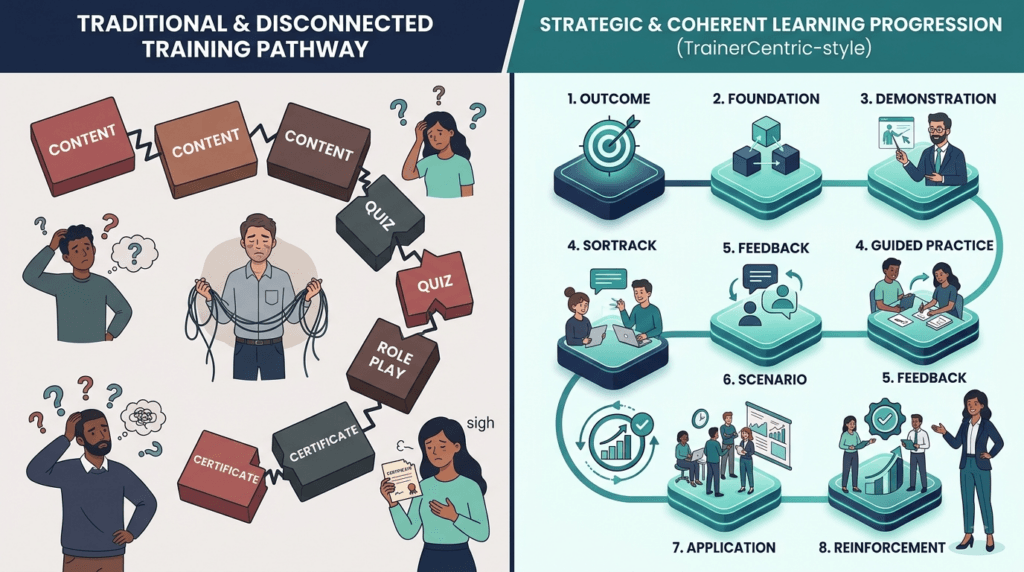
Skip it when the job actually requires integrated performance from day one, with no simplified version to ease into. And consider starting with a realistic scenario, not ending on one, when it does a better job of surfacing which prerequisites are actually missing than teaching those prerequisites in isolation would.
A Framework for Sequencing a Learning Programme
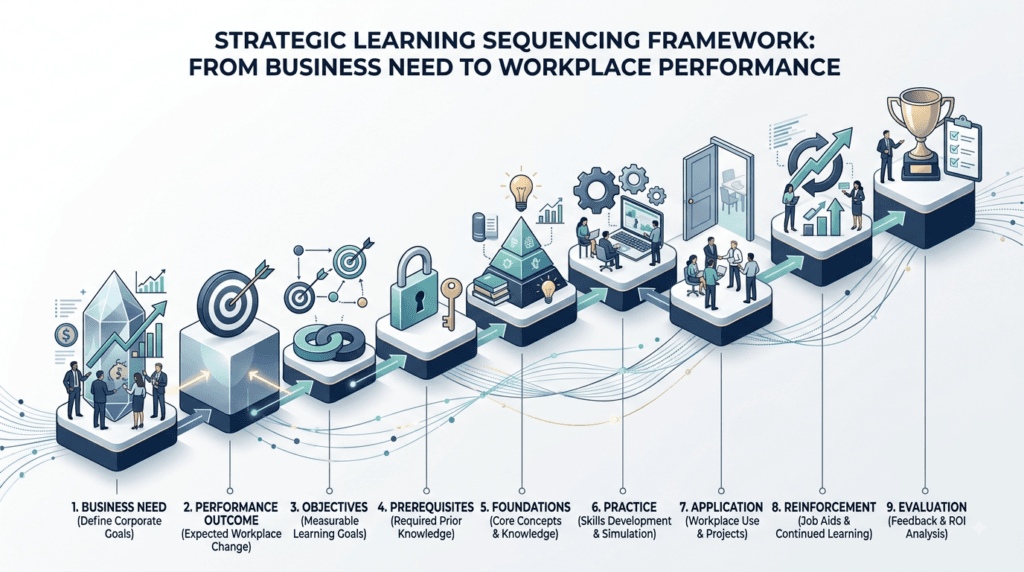
1. Start with the performance outcome, not the content
Before arranging anything, ask what learners should be able to do differently once the programme ends. Starting from “what content do we have” produces a content dump — everything the SME thinks is important, in roughly the order they think of it. Starting from the outcome gives you a destination to sequence toward. This connects directly to the work you do in Training Needs Analysis: the outcome should be clear before sequencing begins, not get invented during it.
Where a learner is starting from matters here too. Sequencing doesn’t just answer “what does the learner need next” — it also has to answer “what does this particular learner already have in place.” A new hire’s sequence might run product knowledge → process → practice → application in full. An experienced employee doing the same programme might only need diagnostic → gap remediation → advanced scenario → application, because most of the foundation is already there. This is exactly what a learning path is for — the same curriculum, sequenced differently depending on the starting point.
2. Write objectives specific enough to sequence against
Vague objectives can’t be sequenced — they don’t tell you what has to come before what. “Understand customer complaints” gives no structure. “Apply the organisation’s complaint-resolution process to resolve a customer issue while following escalation criteria” immediately implies prerequisite knowledge, a process to demonstrate, practice, feedback, and a chance to apply it. Specific objectives, the kind described in Bloom’s Taxonomy: How to Write Learning Objectives That Actually Work, do half the sequencing work for you.
3. Map dependencies with a simple test
For every objective, ask two questions: what must the learner already be able to do before this becomes teachable? And, once they can do it, what does it make possible next? Run that test across a programme and you get a chain — prerequisite → objective → next capability — instead of a flat list. For a service role it might read: product knowledge → product application → customer conversation → objection handling → complaint resolution. This isn’t always a straight line — some programmes genuinely have parallel tracks — but naming the dependencies tells you which ordering mistakes would actually cost learners something.
4. Separate what learners need to know from what they need to do
Not all content deserves equal treatment. Some of it is information, some is a procedure to follow, some is a decision to make, and some is a behaviour to demonstrate. Sequencing should move toward capability rather than becoming an extended transfer of information — a point Merrill’s Principles of Instruction makes well. If half your programme is “know about” content and only the last twenty minutes is “do,” the sequence is backloaded in the wrong direction.
5. Build practice in throughout, not at the end
Don’t stack all the practice into the final hour. If the first meaningful practice doesn’t happen until then, you’ve learned almost nothing about whether the sequence works — early practice is diagnostic, not just useful. It tells you whether learners have what they need for the next level of difficulty, while there’s still time to fix a gap. A working progression: explain → demonstrate → guided practice → feedback → independent practice → realistic application.
6. Design the transitions between modules
For every module, ask: what did learners just learn, what are they now ready to do, and why does this next module matter given that? A transition line as simple as “Now that participants can identify the stages of the sales conversation, we can examine what happens when the conversation doesn’t go according to plan” makes the sequence visible to learners instead of leaving it implicit. Each module should create readiness for the next one.
7. Extend the sequence past the last slide
The sequence doesn’t end when the session does. Spaced practice, retrieval, job aids, manager coaching, and short refreshers all belong to the same progression. Microlearning is one useful tool here, though it’s a tool for reinforcement, not a substitute for a well-sequenced core programme.
8. Test the sequence against the actual job
Finish by asking whether this order would still make sense with the learner back at their desk. What happens first on the job? What decision do they face immediately? What information do they need at that moment, and what mistakes are most likely?
That’s one example learning sequence — adapt the stages to the task at hand rather than treating it as a fixed formula, and expect to move through it more than once. Dependency mapping often surfaces something you didn’t plan for: Objective 4 turns out to need Objective 2, Objective 2 needs a prerequisite you weren’t going to teach at all, that prerequisite changes the modality, and the modality changes how much time the live session has left. That’s not a flawed first draft. That’s the design process doing its job — treat the framework above as something you loop through, not a line you walk once.
Deciding What to Move
Once you’re working through a real topic list, this is the test for whether something belongs earlier, later, or not in this sequence at all:
- Is it a prerequisite for something else? If yes, move it earlier or add prerequisite support before the module that needs it. If no, continue.
- Is it essential to the outcome? If no, consider shortening it, moving it to optional resources, or cutting it — don’t let it hold a sequencing slot it hasn’t earned.
- Does the learner need to practise it before moving on, or just be aware of it? Practice-worthy content needs a slot with guided practice and feedback attached, not just airtime.
- What happens if the learner gets it wrong? Higher-risk content generally earns a later slot, after controlled practice has built some margin for error.
Case Study: Sequencing a New Manager Programme
Here’s how this plays out on a real brief. Leadership asks for a two-day programme covering delegation, feedback, coaching, conflict, performance management, communication, motivation, and difficult conversations. Left alone, the list turns into an agenda like this:
Stakeholder’s sequence: Leadership basics → Communication → Motivation → Delegation → Feedback → Conflict → Coaching → Performance management.
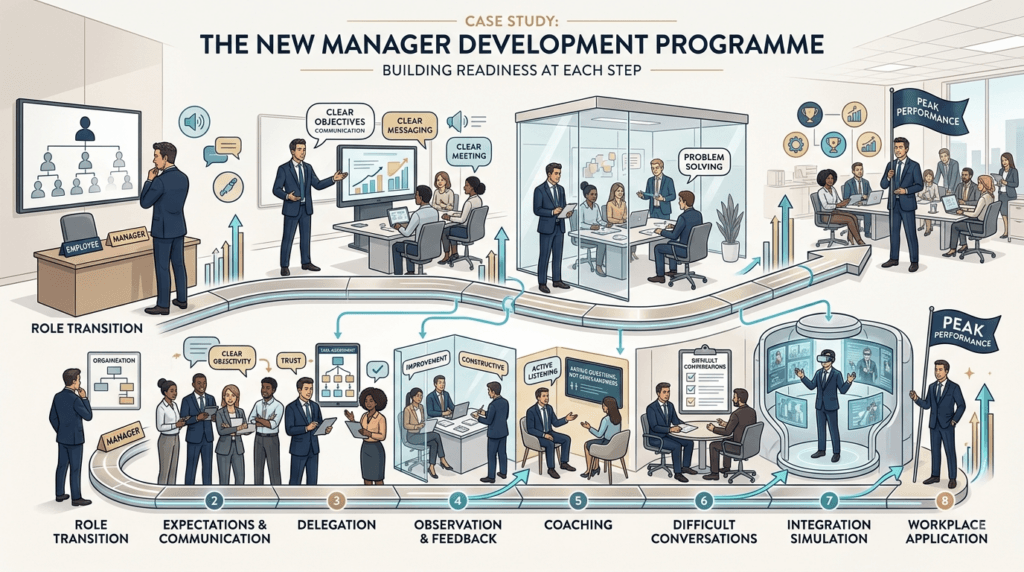
It’s not unreasonable — leadership first because it feels foundational, motivation early because it feels energising. But run the dependency test against it and problems appear fast. Feedback is taught before learners have anything concrete to give feedback on, because delegation — the thing that produces observable work to comment on — comes after it. Coaching is taught before feedback has been practised, even though coaching is largely feedback applied over time. Conflict sits in the middle with no connection to the communication skills taught two modules earlier.
Designer’s sequence, and the reasoning behind each swap:
- Role transition opens the programme, because what a manager needs first is clarity on what actually changed about their job — not a skill, but a frame for everything after it.
- Expectations and communication comes next, since every later skill assumes the manager can set clear expectations with their team.
- Delegation follows, on the reasoning that this particular programme’s performance model assumes managers first assign and observe work before they’re asked to coach performance on it. That’s a design choice, not a universal law — a programme built around a manager who inherits an already-running team might reasonably teach coaching first. Here, it’s sequenced because feedback and coaching both need something concrete to point at, and delegation is what creates that.
- Observation and feedback builds directly on delegated work now in progress.
- Coaching follows feedback, because coaching is sustained, forward-looking feedback — it needs the single-instance skill in place first.
- Difficult conversations comes late deliberately, applying every skill above to the highest-risk situations rather than opening with them.
- Integration simulation gives learners one realistic scenario that requires all the previous skills at once — the test of whether the sequence actually built toward something.
- Workplace application and manager check-in closes the loop after the room empties.
Laid out as a sequence, it looks like this:
| Sequence | Focus | Why it comes here |
| 1 | Role transition | Establishes what actually changed about the job |
| 2 | Expectations and communication | Foundation every later skill assumes is in place |
| 3 | Delegation | Creates observable work to give feedback on |
| 4 | Observation and feedback | Responds to the work delegation just produced |
| 5 | Coaching | Sustained feedback — needs the single-instance skill first |
| 6 | Difficult conversations | Applies everything above under real pressure |
| 7 | Integration simulation | Tests whether the sequence actually built toward something |
| 8 | Workplace application | Transfers the skills past the classroom |
Nothing on the original list was cut. What changed was which skill had to exist before the next one could be practised honestly.
Sequencing eLearning Modules
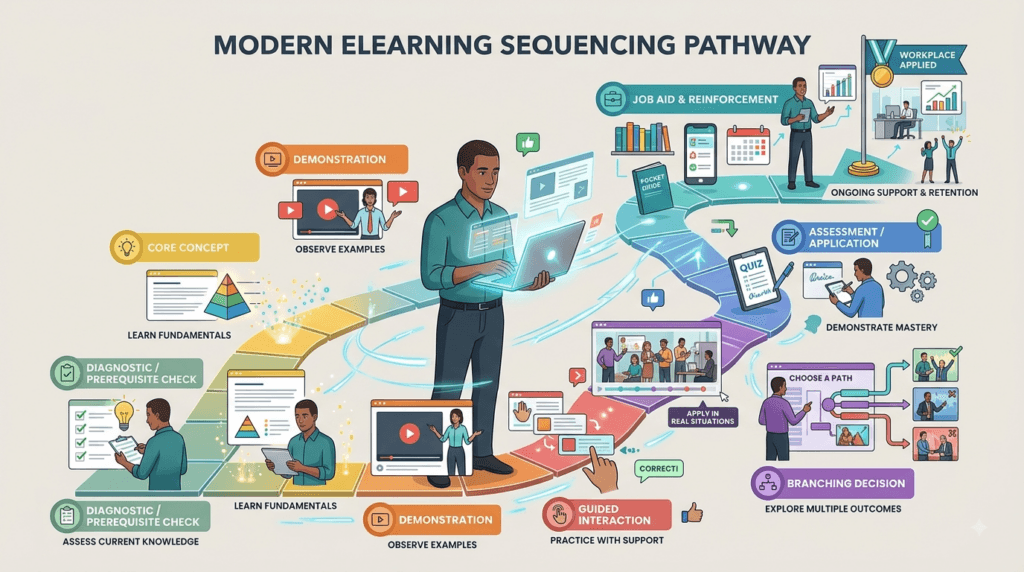
eLearning sequencing carries extra weight because there’s less opportunity for a facilitator to notice confusion and repair the order on the fly. A working shape, module by module:
| Stage | Purpose |
| Before Module 1 | Diagnostic or prerequisite check |
| Module 1 | Core concept |
| Module 2 | Demonstration |
| Module 3 | Guided interaction |
| Module 4 | Scenario |
| Module 5 | Branching decision |
| Module 6 | Assessment / application |
| After the course | Job aid and reinforcement |
Don’t sequence eLearning according to slide count or how the SME’s source deck happened to be organised. Sequence it according to learner decisions and dependencies — the same test used in the framework above, applied one screen at a time. A course that hides its logic behind a generic “Next” button forces learners to build their own mental map of the structure while also trying to learn the content — exactly the extra load a well-sequenced course is supposed to remove.
Sequencing Soft Skills and Leadership Content
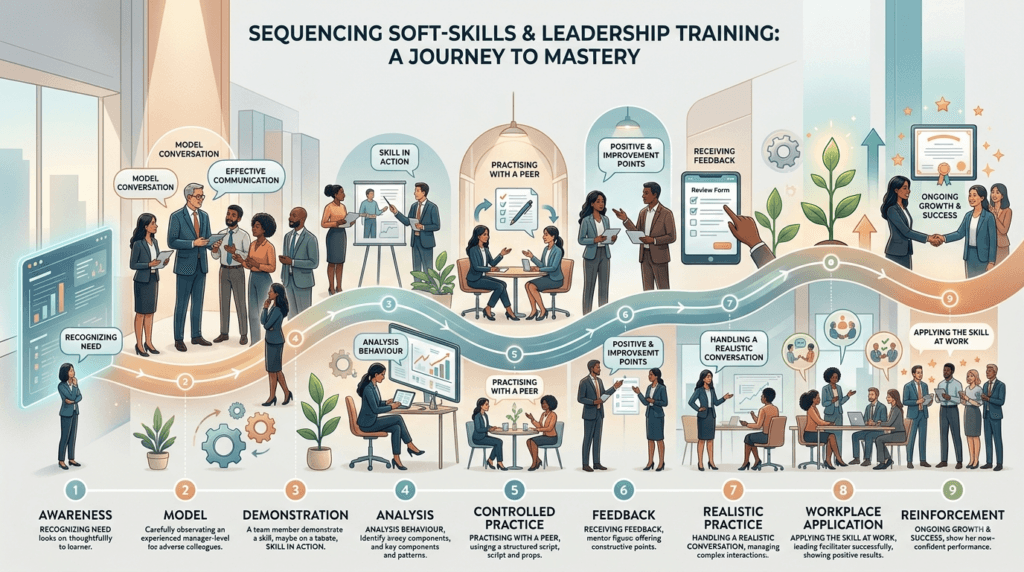
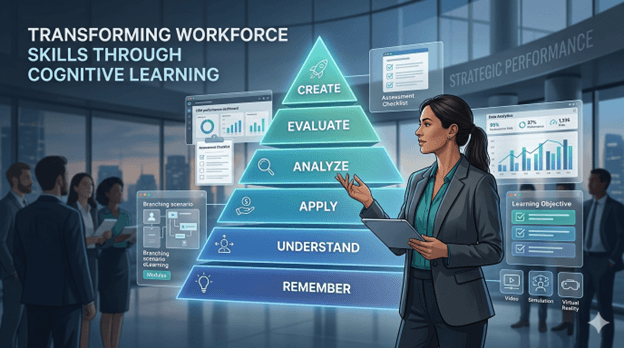
Soft skills often need more deliberate sequencing than technical content, because knowing the concept and being able to perform it under pressure are not the same capability, and there’s rarely a shortcut from one to the other. The progression usually looks like: awareness → model → demonstration → analysis → controlled practice → feedback → realistic practice → workplace application → reinforcement.
What that looks like for three common programmes:
- Communication training: concept → model → observation of a sample conversation → analysis → micro-practice on one component → feedback → full conversation → difficult scenario → workplace application.
- Leadership development: self-awareness → role expectations → specific observable behaviours → practice → feedback → coaching support → real-world application.
- Negotiation training: principles → preparation → questioning technique → active listening → trade-off analysis → simulation → reflection.
The pattern across all three: understanding the model comes early, but so does a small, low-stakes rehearsal of it. Most soft-skills programmes fail by jumping straight from “here’s the framework” to “now role-play a high-stakes conversation,” with nothing in between to build confidence or catch a misunderstanding before it’s expensive.
Sequencing for Hybrid Programmes
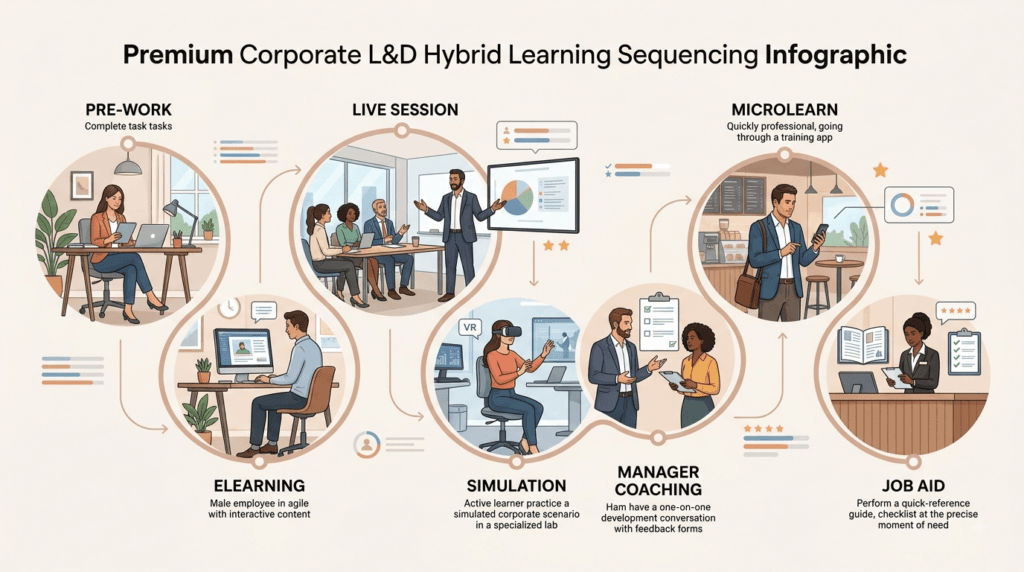
Hybrid learning spreads the experience across self-paced eLearning, live virtual sessions, classroom time, peer practice, manager coaching, and workplace assignments — which means the sequencing question isn’t just “what order,” but “which modality handles this stage best.”
| Modality | Best used for |
| Pre-work | Activation and prerequisite knowledge |
| eLearning | Foundational knowledge |
| Live session | Discussion, demonstration, guided practice |
| Simulation | Complex decisions and integration |
| Manager coaching | Workplace application |
| Microlearning | Retrieval and reinforcement |
| Job aid | In-the-moment performance support |
A working sequence built on that table: pre-work → virtual concept session → classroom or virtual practice → workplace assignment → manager feedback → microlearning reinforcement → follow-up assessment. Hybrid design isn’t “put some of it online” — it’s assigning each modality the kind of learning it’s actually good at, in an order that still respects dependency and practice. For a deeper look at combining modalities, see our guide to blended learning design [internal link: Blended Learning Design: How to Combine Online and In-Person Training from the content planner].
How to Audit an Existing Sequence
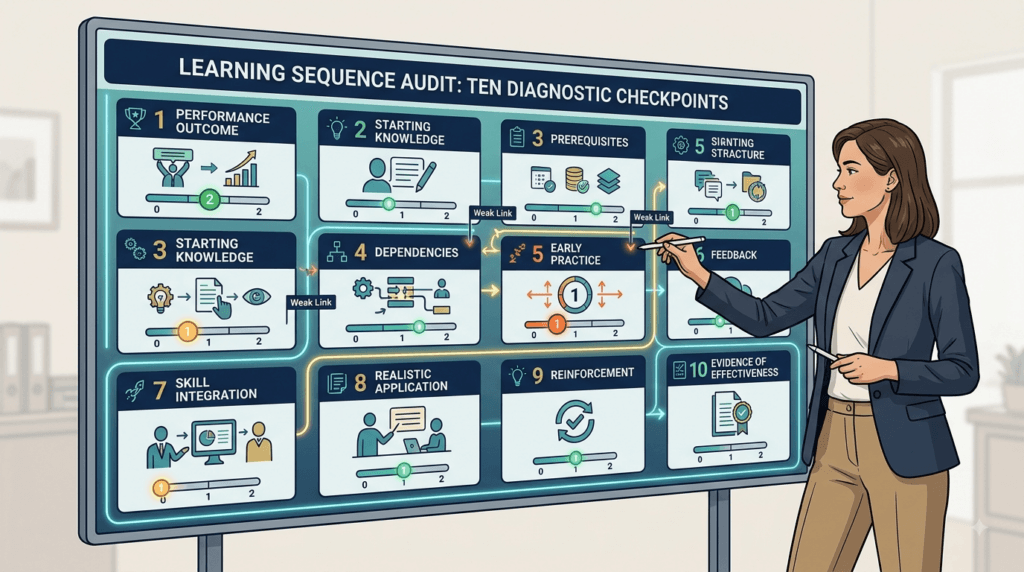
Some symptoms are reliable tells that a programme’s order — not its content — is the problem:
- Learners repeatedly ask for information that appears later in the programme.
- Role plays consistently fail because learners don’t yet know enough to attempt them.
- The facilitator keeps having to reteach material from an earlier module.
- Learners pass individual knowledge checks but fail integrated scenarios.
- Later modules have to stop and explain a concept that should have been covered earlier.
- Participants describe the programme as “a bit random” even when they rate individual sessions well.
- Managers report the training was well received, but employees still can’t apply it on the job.
If two or more of those sound familiar, run a quick audit. Score each item 0 (missing), 1 (weak), or 2 (adequate):
The 10-Minute Learning Sequence Audit
- Is the final performance outcome clearly defined?
- Is it clear what learners must know before the programme starts?
- Is it clear what learners must be able to do before each later module?
- Have the dependencies between objectives actually been mapped?
- Does first practice happen early enough to be diagnostic, not just confirmatory?
- Is there a feedback point after that first practice?
- Is there a module that integrates multiple skills together?
- Does the programme include a realistic, not sanitised, application task?
- Is there anything scheduled after the programme to reinforce it?
- Is there any evidence — an assessment, a manager report, a workplace observation — that tells you the sequence actually worked?
Treat the score as a diagnostic, not a pass/fail test. There’s no validated cutoff that separates a “good” sequence from a “bad” one — the score’s job is to point you at which questions to investigate first, not to prove that sequencing is the only thing wrong with the programme. A cluster of low scores around dependencies and early practice is a stronger signal than the total on its own.
A Learning Sequence Planner
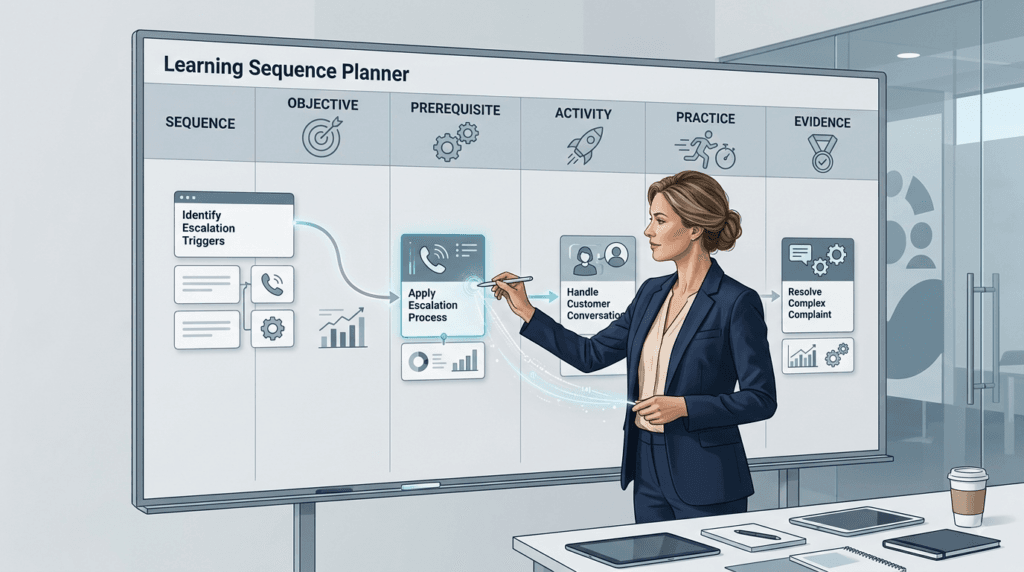
Fill this in before building a single slide or activity — it forces the dependency questions early, while they’re still cheap to fix.
Programme: Customer service — escalation handling
Target learners: Frontline service agents, 3–6 months tenure
Final performance outcome: Correctly identify and resolve complex customer complaints, escalating only when the criteria genuinely require it
| Sequence | Objective | Prerequisite | Activity | Practice | Evidence |
| 1 | Identify escalation triggers | Product and process knowledge | Scenario analysis | Classification exercise | 4/5 correct |
| 2 | Apply the escalation process | Trigger criteria (Step 1) | Facilitator demonstration | Guided case | Correct escalation decision |
| 3 | Handle the customer conversation | Product knowledge + process | Live demonstration | Role play | Rubric score |
| 4 | Resolve a complex complaint | All of the above | Simulation | Full case | Successful resolution |
Once a table like this fills in cleanly — with no objective sitting above a prerequisite it depends on — the programme’s sequence is much easier to defend and test. If you can’t fill in the prerequisite column without hesitating, that’s worth noticing: it usually means the sequence isn’t ready to finalise yet, whatever the rest of the table looks like.
Common Mistakes in Sequencing Learning Content
Sequencing by the SME’s mental model. Experts organise information the way they understand it, rarely the way a beginner needs to encounter it. SMEs are usually excellent at telling you what learners need to know — they’re not always the best people to decide the order in which a novice should meet it, because they stopped being a novice a long time ago.
Front-loading all the theory. When application is delayed too long, learners disengage before they get to use what they’ve been told.
Treating every topic as equally important. Without prioritisation, everything gets equal airtime and nothing gets the depth it needs.
Ignoring prerequisites. Role-playing objection handling before learners know the product is the same mistake in a different costume.
Making every module self-contained. Programmes without connective tissue between modules feel like unrelated workshops stitched together.
Confusing complexity with importance. A topic can be genuinely complex and still not belong early in the sequence.
Stopping the sequence at the classroom door. Reinforcement and workplace application are part of the sequence, not an add-on.
Sequencing around available content instead of the task. The most common version of every mistake above: the order reflects what slides already exist, not what the learner needs next.
Where Sequencing Fits in Instructional Design
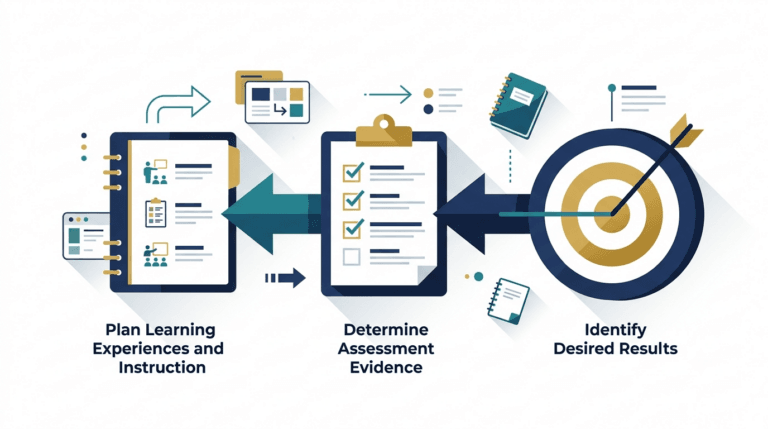
Sequencing isn’t a standalone step — it sits inside the broader design process. Backward Design (Understanding by Design) is a useful anchor: start with the desired result, decide what counts as acceptable evidence of it, work out what learners need to learn and practise, and only then sequence the experiences that get them there. Within ADDIE, sequencing decisions mostly get made explicit during Design, get built out during Development, and get tested — often exposed as wrong — during Implementation.
It’s a related but separate question from how the overall curriculum gets designed in the first place, covered in [internal link: Curriculum Design vs Instructional Design: What’s the Difference? from the content planner].
What is learning sequencing in instructional design?
It’s the deliberate ordering of concepts, skills, practice, and reinforcement so each stage prepares learners for what comes next — distinct from simply arranging topics into an agenda.
How do you sequence learning content for a training programme?
Start from the performance outcome, write specific objectives, map dependencies between them, then order content so foundational knowledge precedes the practice and application built on it.
Should training topics be taught in the order they’re used on the job?
Often, but not always — content the learner needs immediately after training earns a later, more realistic slot in the sequence, while foundational knowledge they’ll draw on repeatedly usually needs to come first, even if it’s used less immediately.
What should you do when two learning objectives depend on each other?
That usually signals one objective is really two — split it so the smaller, genuinely prerequisite piece can be taught and practised before the larger one requires it.
Can learning sequencing differ for beginners and experienced employees?
Yes — the dependencies differ by starting point, which is exactly what a learning path is for: the same curriculum, sequenced differently depending on what each group already has in place.
What’s the difference between a learning sequence and a curriculum?
Curriculum defines what belongs in the programme; sequence defines the order those things should be encountered in.
How do you sequence modules in an eLearning course?
Make dependencies and required order visible to the learner up front, chunk content, build in progressive complexity, and give immediate feedback — since there’s no facilitator to repair a confusing order in real time.
How do you know if a training programme is sequenced correctly?
Run it through a sequence audit: map objectives against prerequisites, check whether practice happens early enough to be diagnostic, and confirm the order still makes sense once the learner is back at their desk.
How do you sequence training modules for leadership development?
Start with self-awareness and role expectations before naming specific behaviours, then move through practice and feedback before asking learners to coach or apply the skill in a real, higher-stakes situation — jumping straight from concept to real-world coaching is where most leadership programmes lose people.
The Practical Rule
Don’t ask only “what topic should come next?” Ask “what does the learner need to be ready to do next?” A strong programme behaves like a journey: each stage prepares learners for the one after it, practice shows up before independent performance is expected, complexity increases on purpose, prior learning gets activated rather than ignored, and reinforcement continues once the session ends.
Before you build your next programme, take one you’ve already run and trace the sequence module by module. Somewhere in it, there’s probably a place where the order — not the content — is what’s breaking.
References
- Lopker, G. (2016).10 Training Design Tips for Instructional Designers and Trainers. Association for Talent Development (ATD). ATD
- InstructionalDesign.org.Sequencing of Instruction. InstructionalDesign.org. InstructionalDesign.org
- Association for Talent Development (ATD).What Is Instructional Design? ATD Talent Development Glossary. ATD
- Association for Talent Development (ATD).ADDIE Model: Phases and Key Questions. ATD. ATD
- Wiggins, G.Grant Wiggins: Defining Assessment. Edutopia. Edutopia
- Association for Talent Development (ATD).Instructional Design Courses and Training. ATD. ATD
- Association for Talent Development (ATD).E-Learning Courses and Training. ATD. ATD
Further Readings
- How to Apply the ADDIE Model Step by Step
- Bloom’s Taxonomy: How to Write Learning Objectives That Actually Work
- Merrill’s Principles of Instruction: Designing Skill-Based Training
- Cognitive Load Theory
- Backward Design (UbD)
- Microlearning: What It Is, When to Use It, and How to Design It
- The Complete Guide to Facilitation Skills for Corporate Trainers
Author Details

Arindam is a learning and development entrepreneur. He has designed and delivered learning solutions across leadership development, sales enablement, customer experience and digital learning initiatives over the past 15 years. Reach out to him at arindam@trainercentric.in or via his Linkedin Profile: Linkedin