This guide covers icebreakers that actually work in corporate training — practical, no-cringe activities you can use immediately, without the awkward silence or forced fun that usually kills the first ten minutes of a session. If you’re looking for icebreakers that actually work in corporate training and not just another recycled party game, you’re in the right place.
Most bad icebreakers show their cracks fast. You know the drill: “Tell us your name, your role, and a fun fact.” Cue the mumbled answer about someone’s dog and the room quietly checking out before the actual training even starts.
Here’s the thing though: icebreakers aren’t the problem. Bad icebreakers are the problem. Effective corporate training icebreakers build psychological safety and get people talking in under five minutes. Done wrong, they waste time and tell the room, “this is going to be one of those trainings.”
Quick Picks: Best Icebreakers by Scenario
| Scenario | Icebreaker |
| Virtual (large group) | Chat Waterfall |
| Quick sessions (under 10 min) | One Word Check-In |
| Leadership development | The Leadership Moment |
| Large in-person groups | Human Bar Graph |
| Diversity & inclusion | Privilege Walk (Lite Version) |
These quick picks work — but they’re not random. Every one of them follows the same underlying pattern.
The 4-Trait Test: What Makes an Icebreaker Actually Work
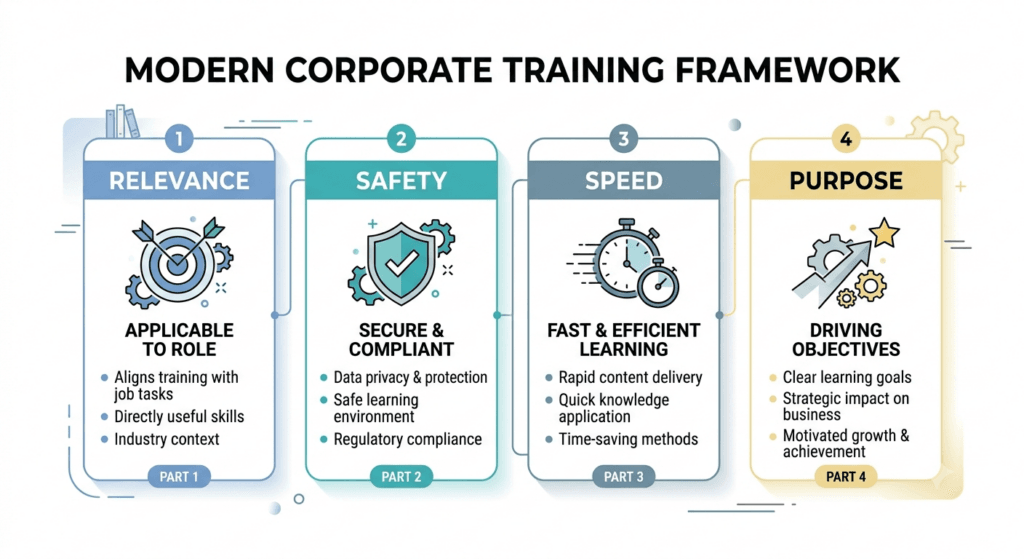
Before the activities, here’s the filter every one of them passes through. Call it the 4-Trait Test — if an icebreaker fails even one of these, cut it:
- Relevance — connects to the topic or the room’s role
- Safety — nobody is forced into public exposure
- Speed — usually under 10 minutes
- Purpose — builds rapport, surfaces experience, shifts energy, or primes the topic
This isn’t just instinct — it’s grounded in real frameworks. Knowles’ andragogy says adults learn best when treated as self-directed participants, not entertained. Tuckman’s group stages remind us every group needs a “forming” moment before real collaboration — a good icebreaker is that stage compressed into five minutes. Edmondson’s psychological safety research explains exactly why forced, high-exposure activities backfire.
Most trainers underestimate this part: they pick an icebreaker because it’s fun, not because it passes the 4-Trait Test. Fun is a side effect. Purpose is the point.
Icebreakers That Don’t Suck for Corporate Training
Here’s the blunt version: most icebreakers suck because they’re built for entertainment, not intent. They ask people to perform before there’s any trust in the room, and everyone can feel it — that’s where many sessions quietly fail, right in the first five minutes, long before the content even starts.
Icebreakers that don’t suck for corporate training do the opposite. They pass the 4-Trait Test above — relevant, safe, fast, purposeful — and every activity in this guide is built around exactly that filter. If a version you’ve tried before flopped, it almost certainly broke one of those four rules. That’s diagnosable. It’s not bad luck, and it’s not “some groups just don’t like icebreakers.”
Why Most Corporate Training Icebreakers Fail
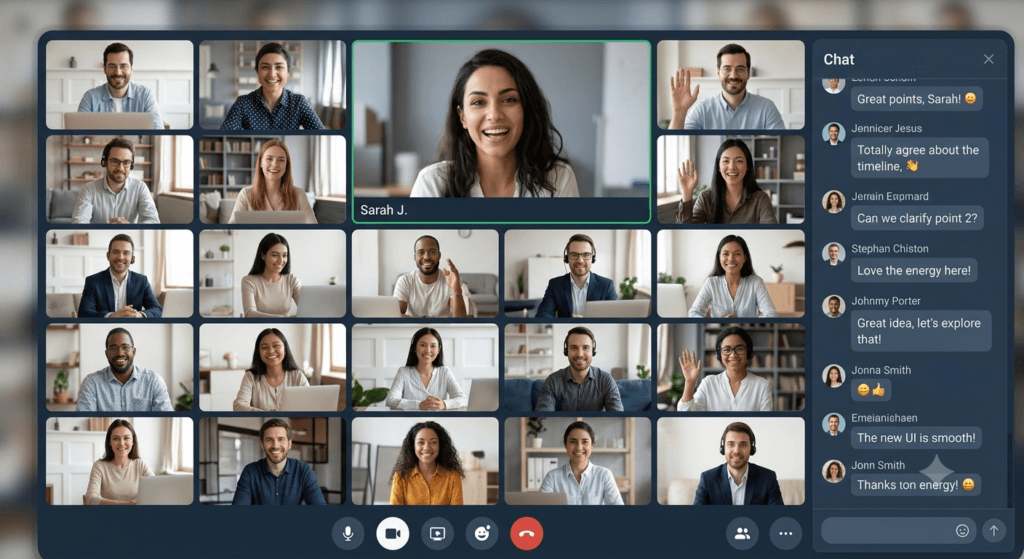
Across hundreds of corporate training sessions, this pattern shows up consistently: the icebreaker breaks trust before the content even gets a chance to build it.
I’ve watched a leadership offsite go cold in under three minutes because the opener was a personality quiz better suited to a college orientation. The room didn’t recover until after lunch — if you’ve ever seen a room go cold like that, this is why: the opener broke trust before the content had a chance to build it.
The pattern is almost always one of these:
- Generic and disconnected from the business context
- Childish for a professional audience
- Forced participation before trust is built
- No clear purpose the trainer can state in one sentence
- Poor execution — rushed instructions, no modeling, no time management
Quick Reference: Matching the Icebreaker to the Situation
| Situation | Best Icebreaker Type | Why |
| Virtual training | Chat-based / poll-based | Avoids camera anxiety, works at scale |
| Large groups (25+) | Movement-based / written | Individual sharing doesn’t scale past ~20 people |
| Leadership development | Reflection-based | Senior audiences disengage from “fun and games” |
| Diversity & inclusion | Low-exposure reflection | Public exposure risks real harm on sensitive topics |
| Sales training | Competitive / rapid-fire | Mirrors the energy the role itself demands |
Quick 5-Minute Icebreakers for Corporate Training

These are practical icebreakers that actually work in corporate training because they’re built around real constraints — time, group size, and psychological safety.
- One Word Check-In
- ⏱ Time: 3–5 min
- 👥 Group Size: Any
- 🎯 Best For: Any session, tight agendas
- 🧩 How to run it: Ask each participant for one word describing their energy coming in — no explanation needed. Go around the room or use chat virtually. Acknowledge patterns you hear.
- ⚡ Why it works: Low commitment, fast, gives you a real-time read on the room without demanding vulnerability.
- 🚫 Watch out: Skip your own word and it reads as an evaluation, not a check-in — always go first.
2. Two-Minute Networking Sprint
- ⏱ Time: 5 min
- 👥 Group Size: Medium–large
- 🎯 Best For: Mixed-department sessions
- 🧩 How to run it: Pair people up, ideally strangers. Give 90 seconds each to answer: “What’s one thing you’re hoping to walk away with today?” Move straight into the agenda.
- ⚡ Why it works: Builds a micro-connection while doubling as a live needs-assessment.
- 🚫 Watch out: Don’t skip debriefing the themes later — if you gather this input and never reference it, it feels performative.
Virtual Icebreakers for Corporate Training That Actually Work
3. Chat Waterfall
- ⏱ Time: 3–5 min
- 👥 Group Size: Any, especially large
- 🎯 Best For: Webinars, large virtual sessions
- 🧩 How to run it: Ask a simple question. Everyone types their answer in chat but holds it — then sends simultaneously on your “go,” flooding the chat at once.
- ⚡ Why it works: Visible, collective energy without anyone needing to unmute or go on camera.
- 🚫 Watch out: This one works especially well in virtual sessions with 50+ attendees — with under 10 people, it can feel gimmicky. Use One Word Check-In instead for small virtual groups.
4. Poll Prediction
- ⏱ Time: 4 min
- 👥 Group Size: Any
- 🎯 Best For: Data-driven audiences
- 🧩 How to run it: Launch a poll with a surprising, topic-relevant stat question. Have people guess before you reveal the real number, then bridge into the day’s content.
- ⚡ Why it works: The curiosity gap keeps attention locked on the reveal.
- 🚫 Watch out: A predictable or obvious number kills the effect completely — this only works if the reveal genuinely surprises people.
Icebreakers for Large Groups in Corporate Training
5. Human Bar Graph
- ⏱ Time: 7–10 min
- 👥 Group Size: 30+
- 🎯 Best For: Conferences, kickoffs
- 🧩 How to run it: Designate one side of the room “1” and the other “10.” Ask a scaled question (“How confident are you giving peer feedback?”). Have people line up accordingly, then interview a few at different points.
- ⚡ Why it works: Visually reveals the spread of experience in the room — useful data for pitching your content correctly.
- 🚫 Watch out: Avoid this if the room is highly hierarchical — junior staff may cluster near senior staff rather than answer honestly. Works best when the group already has some rapport.
6. Sticky Note Storm
- ⏱ Time: 6 min
- 👥 Group Size: Any large group
- 🎯 Best For: Visual/kinesthetic groups
- 🧩 How to run it: Everyone writes one word on a sticky note answering a topic-relevant prompt, then posts it on a wall as they arrive. Cluster similar answers live and comment on patterns. See AI Prompt Library for Trainers for more information.
- ⚡ Why it works: Anonymous-ish contribution lowers social risk while still generating visible, collective input.
- 🚫 Watch out: Don’t let this become decoration — reference the wall again later, or it reads as busywork.
Icebreakers for Leadership Development Programs

7. The Leadership Moment
- ⏱ Time: 8–10 min
- 👥 Group Size: Small–medium
- 🎯 Best For: Leadership development programs
- 🧩 How to run it: Ask participants to think of one leader who shaped how they lead today. In pairs, share who it was and one specific behavior that stuck. A few pairs share with the full group.
- ⚡ Why it works: Surfaces personal leadership philosophy without asking anyone to self-assess or brag.
- 🚫 Watch out: Reference these shared traits as callbacks throughout the day — otherwise the reflection feels disconnected from the rest of the program.
Icebreakers for Diversity and Inclusion Training

8. Privilege Walk (Lite Version)
- ⏱ Time: 10 min
- 👥 Group Size: Small–medium, needs strong facilitation
- 🎯 Best For: Diversity and inclusion training
- 🧩 How to run it: Read neutral statements about workplace experiences. Participants reflect silently — no public stepping or scoring. Debrief as a group on patterns and feelings, not individual disclosures.
- ⚡ Why it works: Builds awareness of differing lived experiences without forcing public exposure.
- 🚫 Watch out: Here’s where this breaks: I’ve seen a well-intentioned version go sideways when a facilitator pushed for public sharing instead of silent reflection — someone shut down mid-session. If you’re not confident debriefing sensitive reactions, don’t run it.
Icebreakers by Training Type: A Fast Cheat Sheet
- Sales training: Go competitive and rapid-fire — try a 30-second “elevator pitch swap” using a random object. It mirrors the energy the role demands.
- Leadership development: Prioritize reflection over performance — The Leadership Moment and a confidence-scaled Human Bar Graph both work well.
- Diversity & inclusion: Stick to low-exposure reflection only — never anything that risks singling someone out publicly.
Icebreakers That Don’t Work (And Why)

- “Two Truths and a Lie” — overused, slow with large groups, reveals nothing useful about the training context
- Trust falls or physical-touch activities — real discomfort and liability risk in mixed-seniority, mixed-gender rooms
- “Share your most embarrassing moment” — invites oversharing or dead silence; vulnerability should be earned, not demanded
- Long personality quizzes — 15 minutes before content even starts signals poor time management
- Any icebreaker with no debrief — without a bridge back to the content, it’s just a detour
How to Choose the Right Icebreaker
- Group size: Under 15 → individual sharing works. Over 25 → go visual, physical, or written.
- Energy level: Sleepy morning crowd → movement or competition. Post-lunch → light and fast.
- Culture and seniority: Senior or conservative audiences → reflective, low-exposure. Informal teams → more playful formats tolerated.
- Objective: Rapport, reflection, energy, or content priming — name it before you pick the activity.
Pro Tips from Experienced Trainers
- Timing: Never let a 5-minute icebreaker bleed into 15 — it undermines confidence in the rest of your agenda.
- Debrief: Connect it back to the session in one sentence: “Notice how fast we found common ground? That’s the skill we’re building today.”
- Resistance: Make participation optional (“share if you’re comfortable”) — this often increases voluntary participation because nobody feels cornered.
- Backup plan: Always carry a high-energy and a low-key option, and choose based on the room’s mood in the first 30 seconds.
Conclusion
Icebreakers aren’t filler — they’re the first data point you get on your room and the first impression you leave as a facilitator. The best icebreakers that actually work in corporate training aren’t about entertainment — they’re about intent. Effective corporate training icebreakers pass the 4-Trait Test: relevant, safe, fast, purposeful. Match the icebreaker to your room, your objective, and your format, and retire anything that consistently falls flat.
Frequently Asked Questions
What is the best icebreaker for corporate training?
There’s no single “best” one — it depends on group size, format, and objective. Fast, low-risk activities like the One Word Check-In or Chat Waterfall work reliably across most sessions.
How long should an icebreaker take in corporate training?
Most icebreakers that actually work in corporate training run 3–10 minutes. Longer risks eating into content time and testing the group’s patience.
What are good virtual icebreakers for corporate training?
Chat-based and poll-based activities — Chat Waterfall and Poll Prediction — work best since they avoid camera anxiety and scale to large remote audiences.
How do you handle participants who refuse to participate in icebreakers?
Never force it. Offer an easy opt-in instead of calling on people directly — removing pressure often increases genuine participation.
Are icebreakers necessary for every corporate training session?
Not always. Short technical sessions may not need one. But for group work, sensitive topics, or new teams, a well-chosen icebreaker meaningfully improves engagement and safety.
What are some meaningful icebreakers for corporate training?
Meaningful icebreakers for corporate training go beyond a quick energizer — they invite genuine reflection tied to the room’s real context, like The Leadership Moment for leadership programs or the Privilege Walk (Lite Version) for D&I training. They still have to pass the 4-Trait Test — relevant, safe, fast, purposeful — they just carry more emotional weight than a five-minute check-in.
References:
- The Adult Learner || 8th Edition || Malcolm S. Knowles, Elwood F. Holton III, Richard A. Swanson || Routledge
- The Fearless Organization || 1st Edition || Amy C. Edmondson || Wiley
- Leading Change || 1st Edition || John P. Kotter || Harvard Business Review Press
- VIRTUAL ENGAGEMENT UNLOCKED: 15 Icebreakers That Actually Work in Virtual Training Sessions || 1st Edition || Arindam Mondal || Trainercentric
- Training from the Back of the Room! || 2nd Edition || Sharon L. Bowman || Pfeiffer
- Facilitator’s Guide to Participatory Decision-Making || 3rd Edition || Sam Kaner || Jossey-Bass
Further Reading:
- Training Needs Analysis
- Job Task Analysis
- The ADDIE Model
- Writing Learning Objectives
- The Kirkpatrick Model
- Adult Learning Theory
- When Training Is NOT the Answer
- How to Handle Difficult Participants in Training
- 12 Facilitation Skills for Corporate Trainers: The Complete Guide + Free Template
- How to Facilitate Training Without Being An Expert
- 25 Facilitation Techniques for Corporate Trainers (2026 Guide)
- Learning Experience Platform (LXP): Features, Benefits, Examples and Whether You Need One
Author Details

Anupama Mitra is a learning experience designer, writer and facilitator with a deep interest in how people learn, adapt and grow at work. With over a decade of experience in corporate learning and development, she specializes in simplifying complex ideas into practical, actionable insights. Her work focuses on leadership development, behavioral changes, making workplace learning more human and engaging. You can reach out to her at anupama@trainercentric.com